
Renowned US historian of science Professor Loren Raymond Graham passed away on December 15, 2024. The late American scholar wasn’t just a narrator of events and personalities. He was known as an excellent thinker, who put forward his own ideas based on decades of the painstaking study of Soviet science. One year after his demise I would like to commemorate the respectable researcher with this humble tribute.

At the beginning of the 1990s, as a schoolboy, I bought the Russian-language edition of Prof. Graham’s magnum opus — Science, philosophy, and human behavior in the Soviet Union — at a bookshop of the Kazakh rural settlement. This fact alone would give you an idea about at least two remarkable circumstances: the US historian of science’s global authority on the subject and the far-reaching scope of Soviet education! Even the indigenous teenager in the remote corner of Kazakhstan became an avid reader of this groundbreaking treatise, which has inspired me to learn about philosophical background of scientific knowledge. Recently, I read again the book from cover to cover. This time it was the original edition, published by Columbia University Press in 1987. Let’s review several deep ideas of Prof. Graham, which caught my attention.
On page 135, he displays clear understanding of dialectical materialism’s subtleties. The US researcher warns against straightforward, literal perception of this branch of materialistic philosophy: “The modifications in the interior structure of many rocks are much slower than the biological ones. No one has suggested for this reason that geology is undialectical. The commitment of dialectical materialism is that there be change, not that the change occur at a certain rate“. On page 270, Prof. Graham brilliantly explains cybernetic issues by real-life biological examples. Thus, his worldviews prove to be holistic ones, taking into account both living beings and information processes: “If we were conscious of everything that goes on in our stomachs, or even just the information that some part of our bodies must be aware of in order for proper digestion to take place, we would be very neurotic indeed. Yet the human body represents the greatest victory of control over a complex process to which cybernetics can point; the features of its organization are basic to an understanding of cybernetic systems“.
On pages 290-291, the American scholar argues about social implications of digital technologies. He points out that there are broad ideological possibilities, heralded by computers: “The decentralizing implications of cybernetics accelerated in the eighties as attention shifted more and more from large computers to microcomputers and personal computers. In Western Europe and the United States microcomputers rapidly became objects of personal possession, used by business people and scholars in their own homes and businesses. In this development there emerged an ominous possibility from the standpoint of the Soviet leadership. Every personal computer with an attached printer is a potential printing press, capable of producing samizdat documents in unlimited copies“.
On pages 412-413, Prof. Graham puts forward his pro-evolution opinions concerning cosmological problems of the Universe. He objects to a superficial, profane concepts of infinity and eternity as endless repetition of identical stages, saying that “a pulsating or oscillating metagalaxy would not, by itself, be a satisfactory exit from the cosmological problem since the existing forms of such models are based on endless identical repetition, in which stages are indistinguishable one from another. Such a hypothesis would contradict the principle of the evolution of nature, reverting man’s scientific explanation of the universe to an entirely static mold, similar to the Aristotelian model as interpreted by the scholastic philosophers“. On page 429, he acknowledges the superiority of dialectical materialism among modern schools of thought, because of the universal scope of its ideas: “In terms of universality and degree of development, the dialectical materialist explanation of nature has no competitors among modern systems of thought. Indeed, one would have to jump centuries, to the Aristotelian scheme of a natural order or to Cartesian mechanical philosophy, to find a system based on nature that could rival dialectical materialism in the refinement of its development and the wholeness of its fabric“.

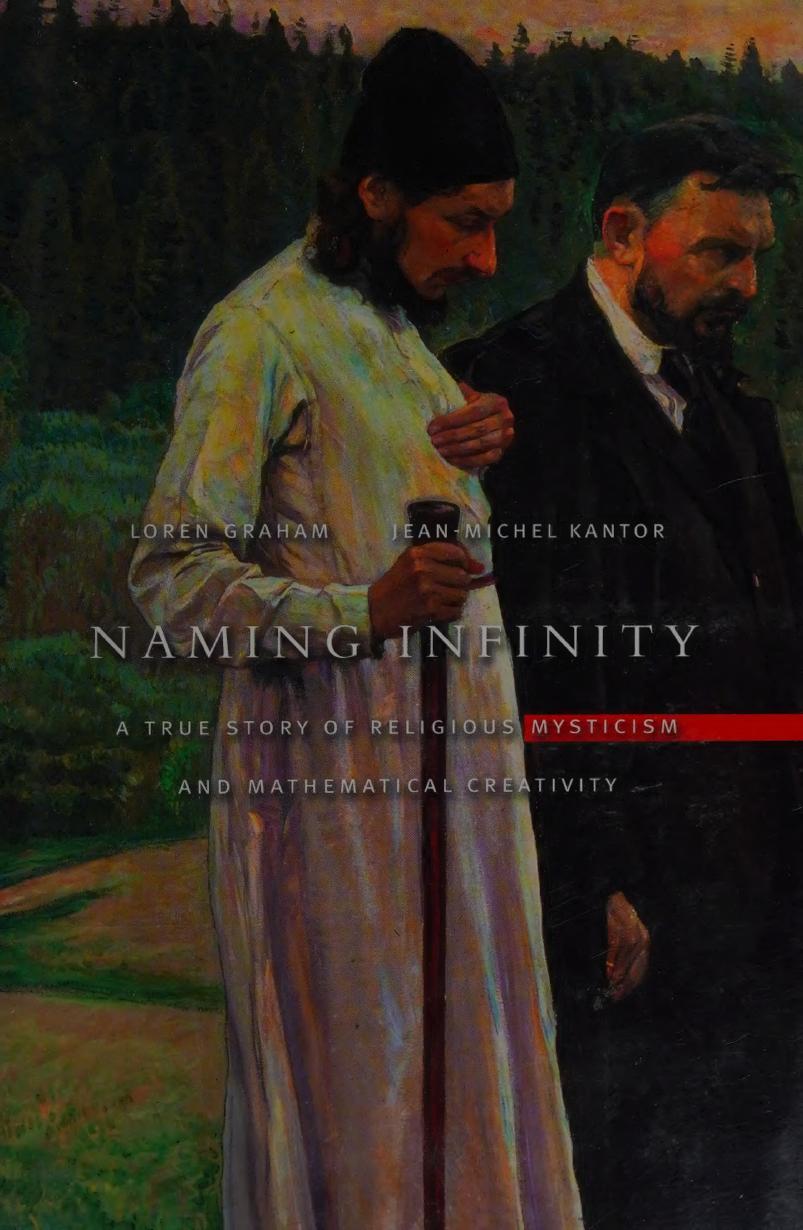
As an amateur scientist, I study fundamental problems of infinity and eternity. Therefore, it was an honour and privilege that Prof. Graham himself had recommended me to read a book Naming infinity: a true story of religious mysticism and mathematical creativity, 2009, published by the Belknap Press of Harvard University Press, which he coauthored with a French historian of mathematics Jean-Michel Kantor. On page 22, the authors briefly outlined a popular concept of infinity, still prevailing among laymen. Such clearcut descriptions are quite helpful for those, who want to work out their roadmap for further study of the subject: “Even today, the idea of infinity as only a potential is the intuitive concept of the layperson, who knows very well that any specific number he or she mentions can always be exceeded“.

Finally, just one month prior to his death Prof. Graham was kind enough to answer my critical message concerning his treatise. Initially, I wrote to him on November 15, 2024:
“Predominantly, your book Science, Philosophy, and Human Behaviour...,1987 is a well-written, quite instructive piece. But, sometimes controversial statements were made there.
For instance, on page 18 you wrote that “Anti-Semitism also continues to plague Soviet intellectual life, and grew in intensity in the seventies and eighties“. Well, not exactly, I should say. Anywhere, from Soviet movies to TV, from population studies to nuclear physics Jews (aka Khazars) got an upper hand in that period of time. Personally, I never met a Soviet Jew among coal miners, janitors, shepherds, and other manual workers. But, the disproportioned Jewish presence in Soviet sciences, arts, and humanities was intolerable! On the other hand, certain minorities were systematically discriminated. For example, my Soviet Greek friend — a brilliant chemist Georgi Ksandopulo (1929-2021) was one of the designers of Soviet rocket fuel. Dr. Ksandopulo was even about to become a Hero of Socialist Labour. But, his Greek background obstructed him from receiving the well-deserved award. For the sake of comparison, a senior friend of Dr. Ksandopulo — outstanding Soviet Jewish physicist Yakov Zeldovich (1914-1987) — was the THREE-times Hero of Socialist Labour! Kazakh scientists were among gifted Soviet mathematicians, geologists, chemists, etc. However, the Kazakhs, as a rule, were discouraged to enter nuclear physics, space exploration, military-industrial complex, and other prestigious positions.
Also, your editors sometimes blundered. On page 110 you funnily wrote about “a practice that practically every gardener in potato regions is aware of“. Well, maybe, in this particular case an adverb “nearly” or “virtually” would have been more appropriate in terms of style”.
The next day, the US scholar replied to me in a rather polite way:
“Dear Professor Nauryz,
Thank you for your message. I appreciate your comments. Discrimination against one group does not excuse discrimination against another. Perhaps I should have said something about discrimination against Kazakhs.
Best, Loren Graham“
However, to do the late American researcher justice, we should acknowledge that he indirectly mentioned Kazakh scientists. On page 534 of Science, philosophy, and human behavior in the Soviet Union, a Russian-language treatise on the category of causality in cybernetics by the Kazakh female philosopher Nagima Mussabayeva (1918-2012) was listed in the book’s bibliography (Нагима Мусабаева. Кибернетика и категория причинности. Алма-Ата, 1965).
 (0)Dislikes
 (0)
(0)
Discover more from TriLingua Daniyar NAURYZ
Subscribe to get the latest posts sent to your email.